


01
Window air conditioners
Confirm removal, filters, coils, drain pans and drain clearing against the unit's condition. Agree any removal and handling first.
MING WAH · AIR-CONDITIONING CLEANING & MAINTENANCE
From one home unit to a phased site programme.
Start with the equipment and site conditions, whether you need one unit cleaned or a programme for an entire property. Ming Wah, part of the Chung Kwun Cypress group, coordinates cleaning for window, split, ceiling, fan coil and VRV units, with the cleaning, drainage and access scope defined before quotation.
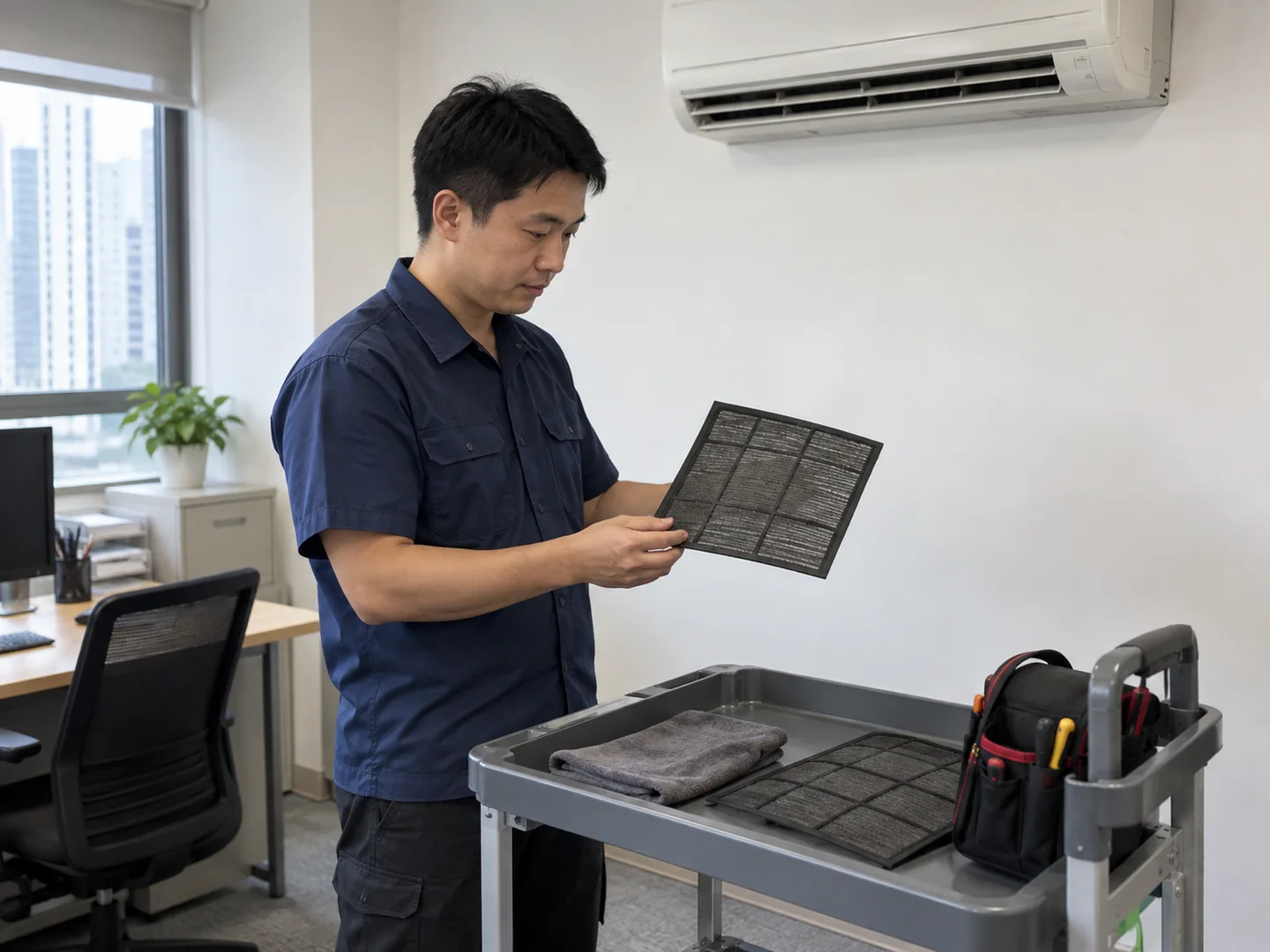
Illustrative engineering scene
Window, split, ceiling and VRV equipment have different constructions. Identify the components to be cleaned before agreeing the method.
START WITH THE EQUIPMENT
If you are unsure about the unit type, send photos of the panel, model label and installation. Classify VRV indoor units by their actual style and avoid counting the same unit twice.
Confirm removal, filters, coils, drain pans and drain clearing against the unit's condition. Agree any removal and handling first.
Define the indoor panel, filter, coil and fan scope. List indoor and outdoor units separately, with wall and electrical protection.
Review access panels, ceiling height and access to the unit and drain pan before arranging cleaning and drainage checks.
Check coils, blower wheels and filters. Fan removal or cleaning within the unit depends on its construction and site access.
Identify and count wall, ceiling and ducted indoor units. Define cleaning and return-to-service arrangements for each unit.
List outdoor quantities, locations and condenser-coil scope separately. Review safe access for roofs, façades or high-level units.
01
Check unit types, quantities, locations and current operation.
02
Agree shutdown windows, protect the site and electrics, and remove accessible components as appropriate.
03
Clean the agreed filters, coils, fans and drain pans, with drainage clearing where included.
04
Reassemble, run operational and drainage checks, and identify completed work and any separate repairs.
MULTIPLE FLOORS · MIXED EQUIPMENT · PHASED ACCESS
A site programme needs more than a total unit count. Identify each location, available shutdown windows and who will check the completed work. An equipment list helps plan phased cleaning around daily operations and management requirements.
Discuss site cleaning and tender quotationsList floors, rooms, unit types and quantities, separating indoor and outdoor equipment. Identify related drain-pan and drain-clearing items for quotation.
Set out working hours, areas that cannot be shut down, access panels, water supply, drainage and furniture protection before agreeing the programme.
Agree completion lists, return-to-service checks and handover records in the quotation. Report faults first and approve any repair separately.
The same cleaning label can cover different components and site arrangements. Use these four checks to prepare an enquiry and compare the work included.
Pricing depends on unit type, quantity, condition, cleaning method and access. Send the address, equipment list and available photos. Compare quotes against the same scope, including outdoor units, blower wheels, drain pans, drain clearing, operational checks and work at height.
Filter cleaning addresses dust on removable filters. Deeper cleaning can cover coils, fans and drain pans using products suitable for the equipment, within the agreed scope. Confirm which components are included rather than relying on the term chemical cleaning alone.
Yes. Share the model and photos for window units, wall-mounted or window-mounted split systems, ceiling cassettes and concealed units. A window-mounted split system differs from a self-contained window unit, so list them separately. Removal or additional access openings need prior confirmation.
Fan coil cleaning starts with a review of the coil, fan, drain pan and access space. Blower removal depends on the unit design. List VRV indoor and outdoor units separately: indoor cleaning does not automatically cover the outdoor equipment or maintenance of the entire system.
Start with an equipment list by floor, room and unit type. We can discuss area shutdowns, access windows and handover arrangements. Identify operating restrictions, areas that cannot be shut down and your target programme before quotation.
Use the manufacturer's maintenance guidance, operating hours, site environment and actual dust build-up to plan cleaning. Routine filter care and deeper unit cleaning have different requirements. Long-running or dusty sites can start with an inspection to discuss a maintenance schedule.
The cause needs checking. Dirty drain pans or blocked drains may need cleaning, while leaks can also involve drainage falls, insulation or parts. Poor cooling may involve refrigerant, electrical or equipment faults. Any additional repair is explained and quoted separately.
Confirm each item in the quotation. Outdoor-unit location, access and working height affect the arrangements. Drain-pan cleaning, drain clearing, drainage checks and drainage alterations are distinct items that should be specified.
Follow the manufacturer's guidance for your model's routine care. Filter maintenance reference from Daikin
Share the premises, proposed scope and timing. For tender enquiries, include the brief and submission deadline. Available drawings and recent reports help us review the work; you can contact us before everything is ready.
Project and tender enquiries